
Growing Dahlias
Why grow dahlias?
“Why dahlias?” you might be asking. Or “why dahlia?” as the correct, horticultural plural has no “s”, I believe. I will be using the vernacular plural with the “s”, so look away now if this offends you. My interest in growing dahlias stems from my father’s efforts to grow them for my late mother. Just as the bulk of summer flowers go over in late August, the dahlias are at their best. They come in every colour under the sun and can reach heights of six feet (180cm) or thereabouts. I find it hard not love their myriad forms and hues.
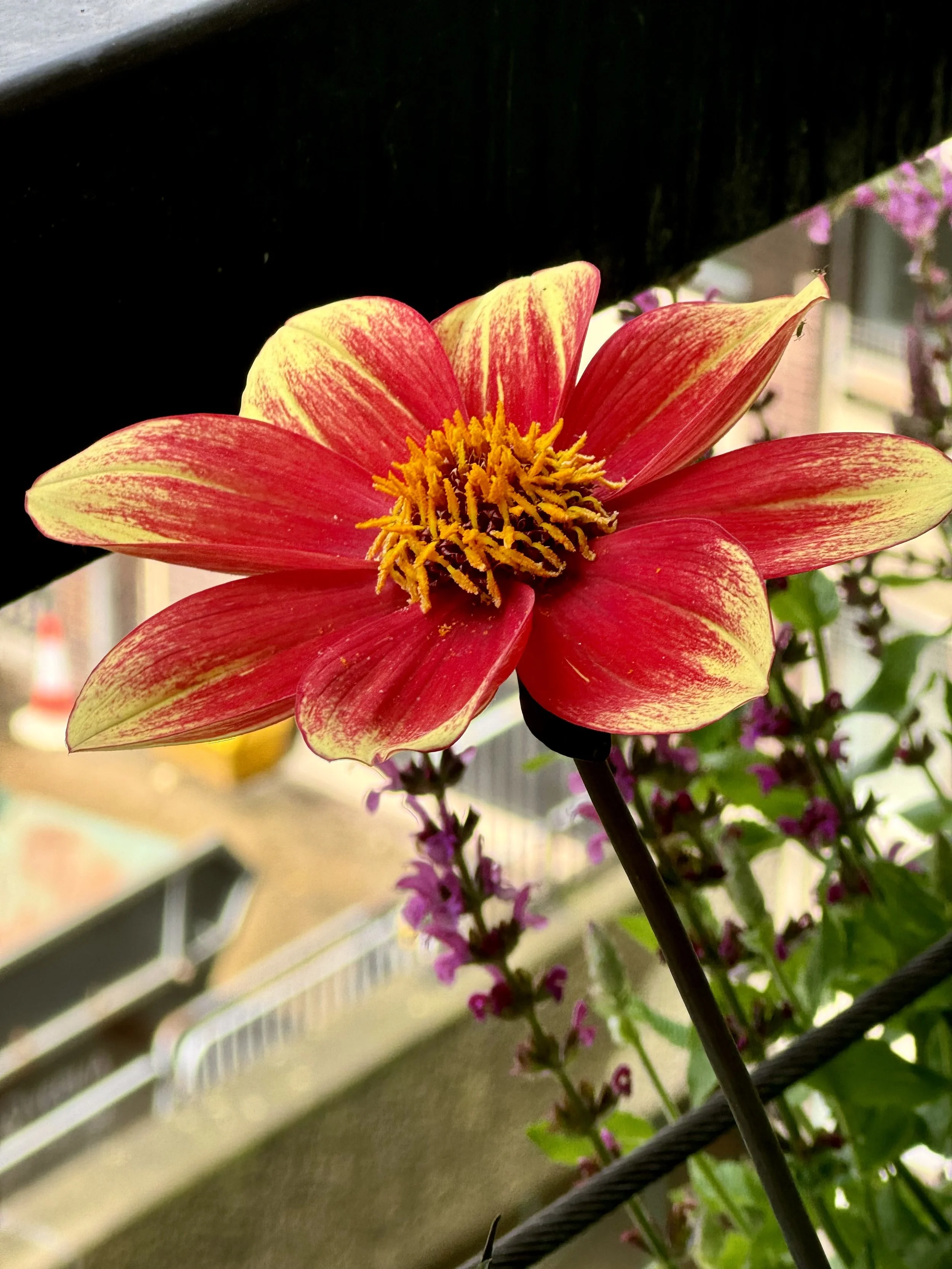
Dahlias were originally planted as food plants when they arrived here from Mexico and central America in the 1500s and are now grown all over the world in temperate places where there is a bit of sun and warmth.
Planting tips
When faced with my barren planters in my new Barbican flat, I was encouraged to experiment by a keen gardening friend who grew dahlias every year. She said: “The worst thing that can happen is that you kill it, and then you try grow something else”. Along with a selection of other plants from an online nursery, I took delivery of some dahlia tubers. If you haven’t seen them before, they are like small sweet potatoes. We dug in some new compost and some Miracle Gro slow-release fertiliser pellets to help them along and planted them in early May. By the middle of June, they had bloomed into a variety of glorious plants and I was amazed how well they took to a balcony high above the city streets. The bees loved them too.
Where to grow dahlias
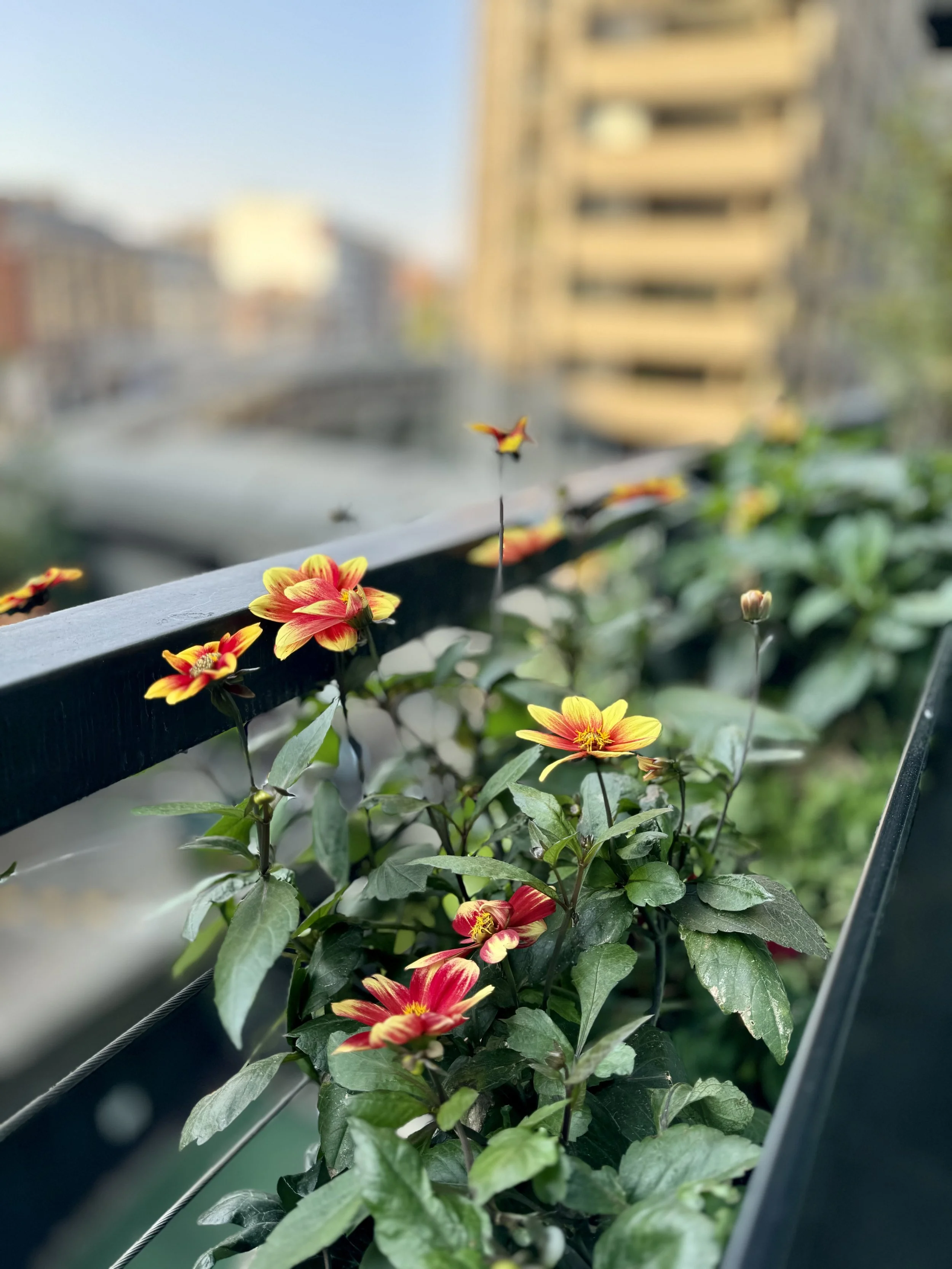
There were some key learning points from my first experimentation with dahlias. The first is that it’s best to avoid anything that grows much above 2 feet/60 cm on a balcony that catches the wind. They buckle when battered by a north-westerly, even when staked. There are many dwarf varieties of dahlias suited to Barbican pots, which is what I grow now.
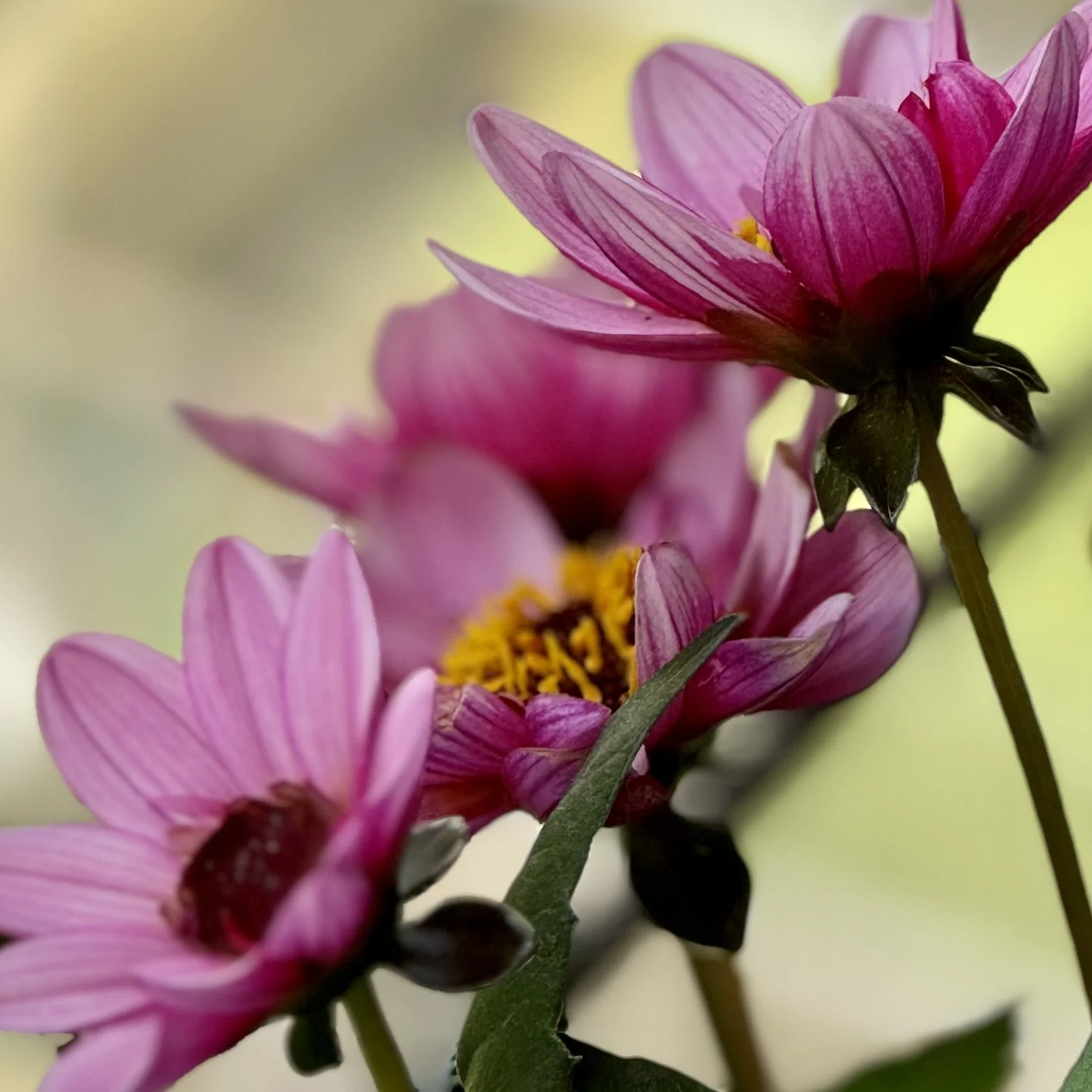
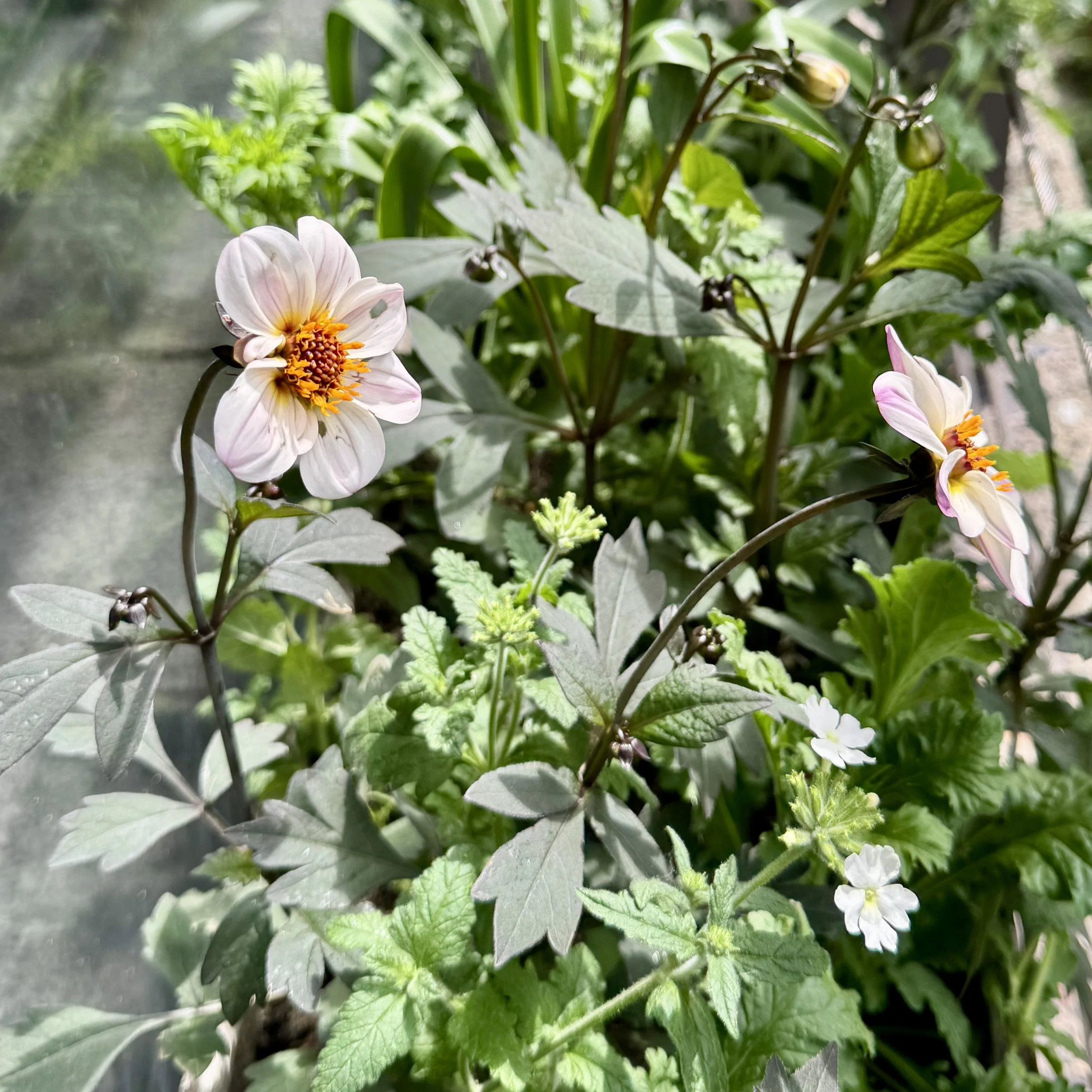
My other learning point is that pollinators prefer the open-flower, daisy-like varieties, rather than the pom-pom shaped ones. Only specialist pollinators can feed on the pom-pom flowers, whereas also sorts of bees and others winged friends love the open blooms.
I was delighted by how well they grew on my west-facing balcony which, at the best of times, gets a couple of hours direct sunlight per day in mid-summer. They are often described by suppliers as needing full sun, which they certainly don’t get on my balcony, but they seem to thrive anyway. However, I suspect they wouldn’t do terribly well on a north-facing balcony.
Compost, fertilisers and watering
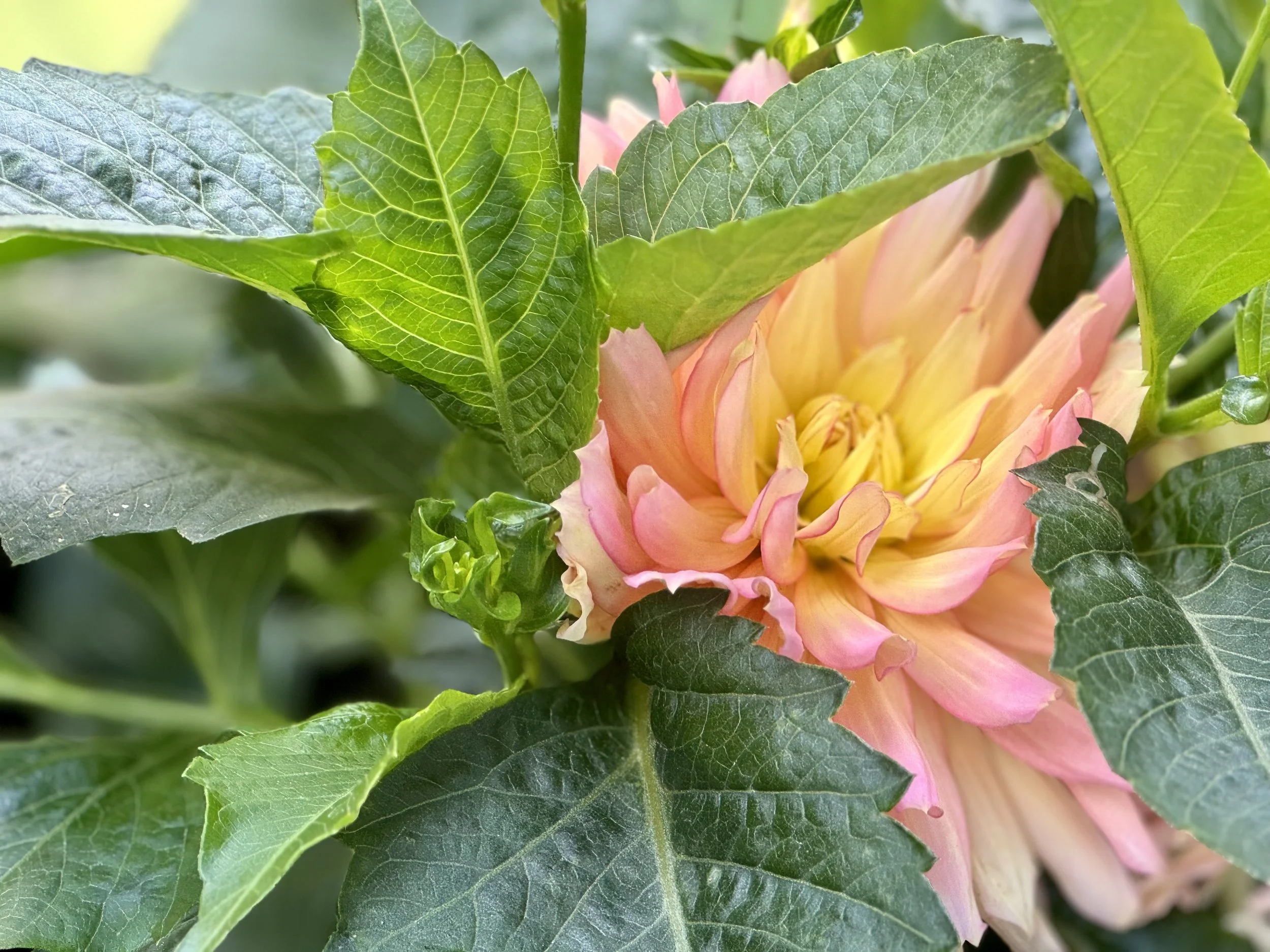
I grow them in an all-purpose compost, which can be used to refresh old compost in your pots. You can start planting them out from March onwards and it’s important to follow the instructions on how to plant them. The crown of the tuber needs to be slightly above the level of the soil or compost, the right way up. You can identify it because it looks like the last remains of a stem.
Dahlias are good at handling hot weather under normal circumstances and mostly only need watering once a week. It’s best to give them a good soak once a week rather than a superficial spritz of water every day. They will wilt if desperate for water but will recover when you water them. During a heat wave, they might need to be watered twice a week, so you need to think about who is going to take care of them for you if you’re away on holiday.
I usually use Miracle Grow slow-release pellets to feed the compost, which they seem to like. I also scatter a handful of comfrey pellets across the surface every few months, which is an excellent, all-round way to feed the compost with organic material.
Deadheading and dividing plants
You can prolong their flowering by deadheading the blooms once they start to go over. Cut back to a leaf node and they will keep flowering until October.
Dahlias can easily be divided. In late Winter or early Spring dig them up careful and split into two or more tuber sets. It’s a good idea to cut off any dead roots or unhealthy-looking bits. Then plant each piece 18 cm apart and you have free plants. Magic!
Overwintering
I don’t think it’s necessary to lift dahlia tubers in the Barbican as they are not subject to frost on our balconies. In colder climates, they need to be stored in a cold dark place, like my father’s garage, and replanted in the spring. Mine have come back year after year.
Recommended dwarf varieties
Some of my favourite dwarf varieties are:
Dahlia “Dahlegria Bicolore”
Dahlia “Pretty Woman”
Dahlia “Mystic Dreamer”
They all grow well on a west-facing, Barbican balcony. As I am sure will many others. If you’re curious, I urge you to have a go growing them. They are things of pure joy and worth a trial.
Guide and photographs by Patrick Gibbons, Seddon House