
Balcony Planting
Planting for Barbican balconies
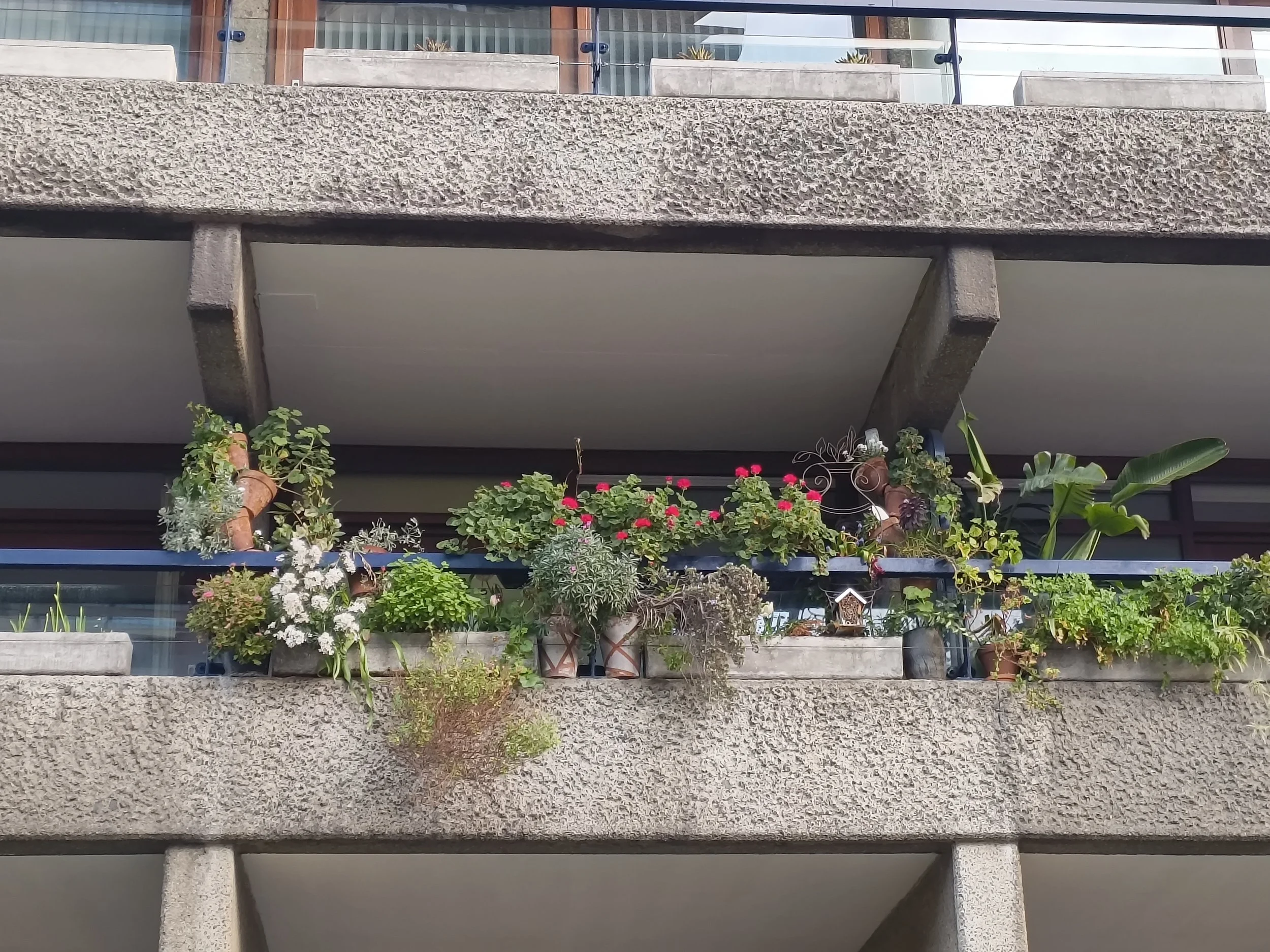
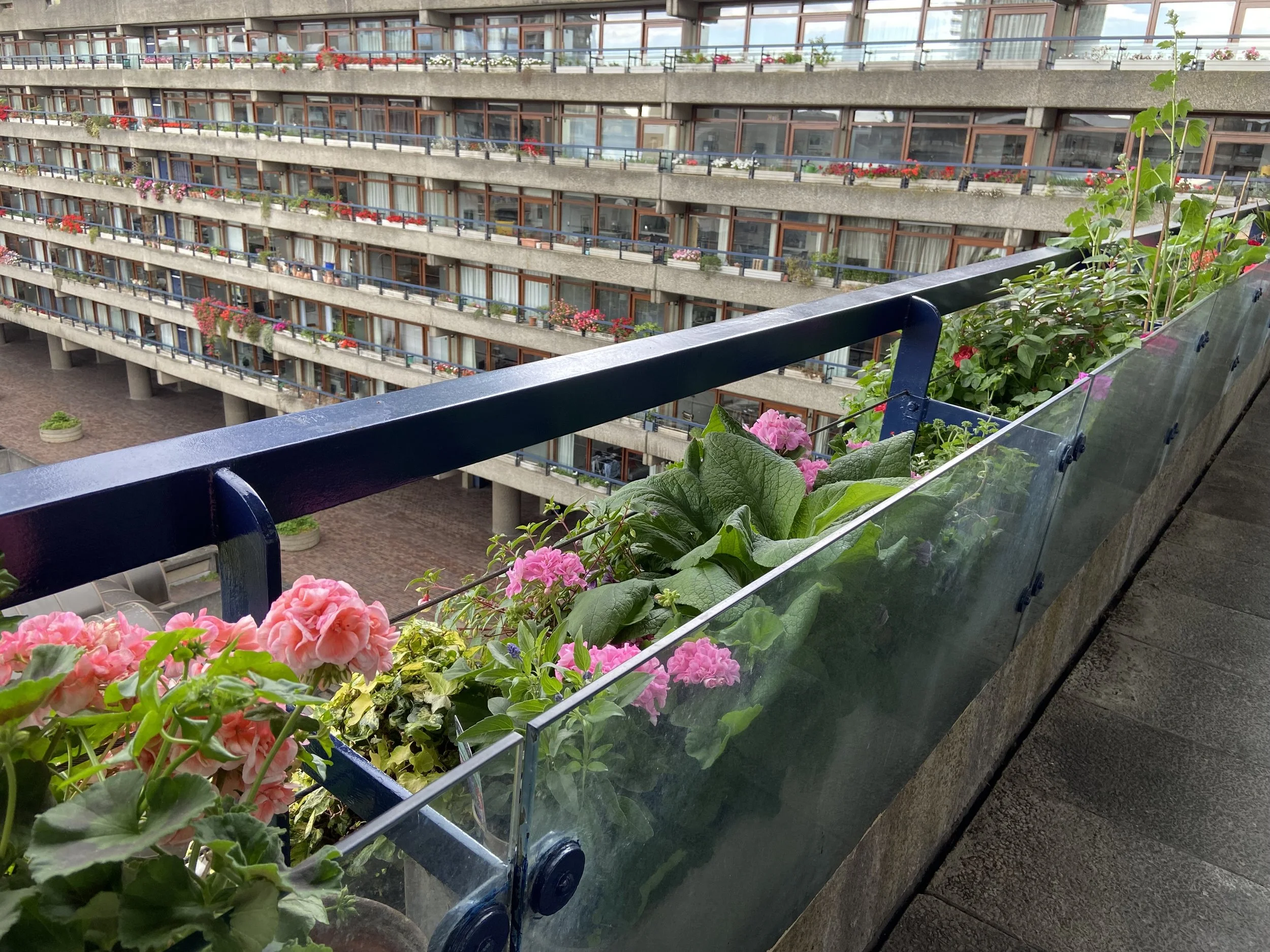
A photo of a building within the Barbican Estate showing a beautiful range of plants being grown in window boxes and on balconies.
Gardening in the Barbican is a different challenge to gardening in most other places.
Containers restrict root growth, and there are many micro-climates within the Estate - plants may have to contend with gusty winds and erratic watering (from rain or residents!).
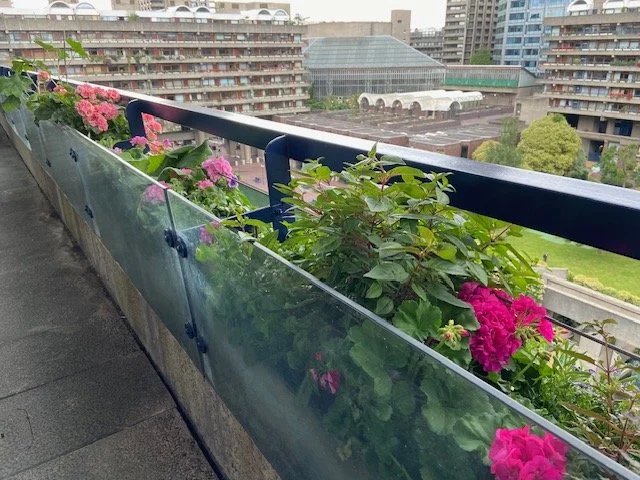
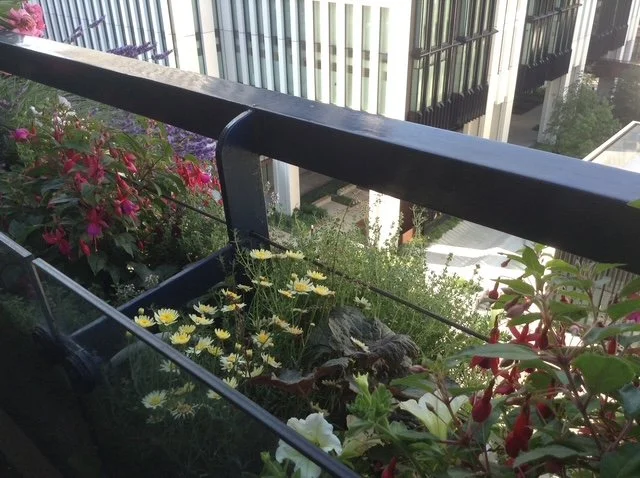
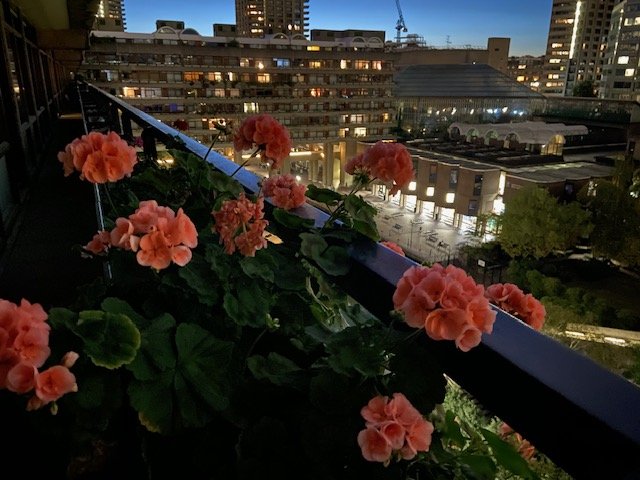
All plants try to grow and flower towards light, so flowers may be facing away from the flat. Nevertheless, many residents grow a wide range of plants on their balconies rather than settling for pelargoniums (often called geraniums), however colourful and tolerant they are of the conditions.
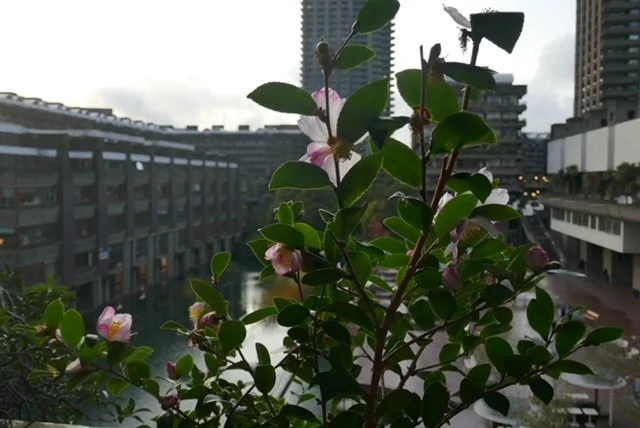
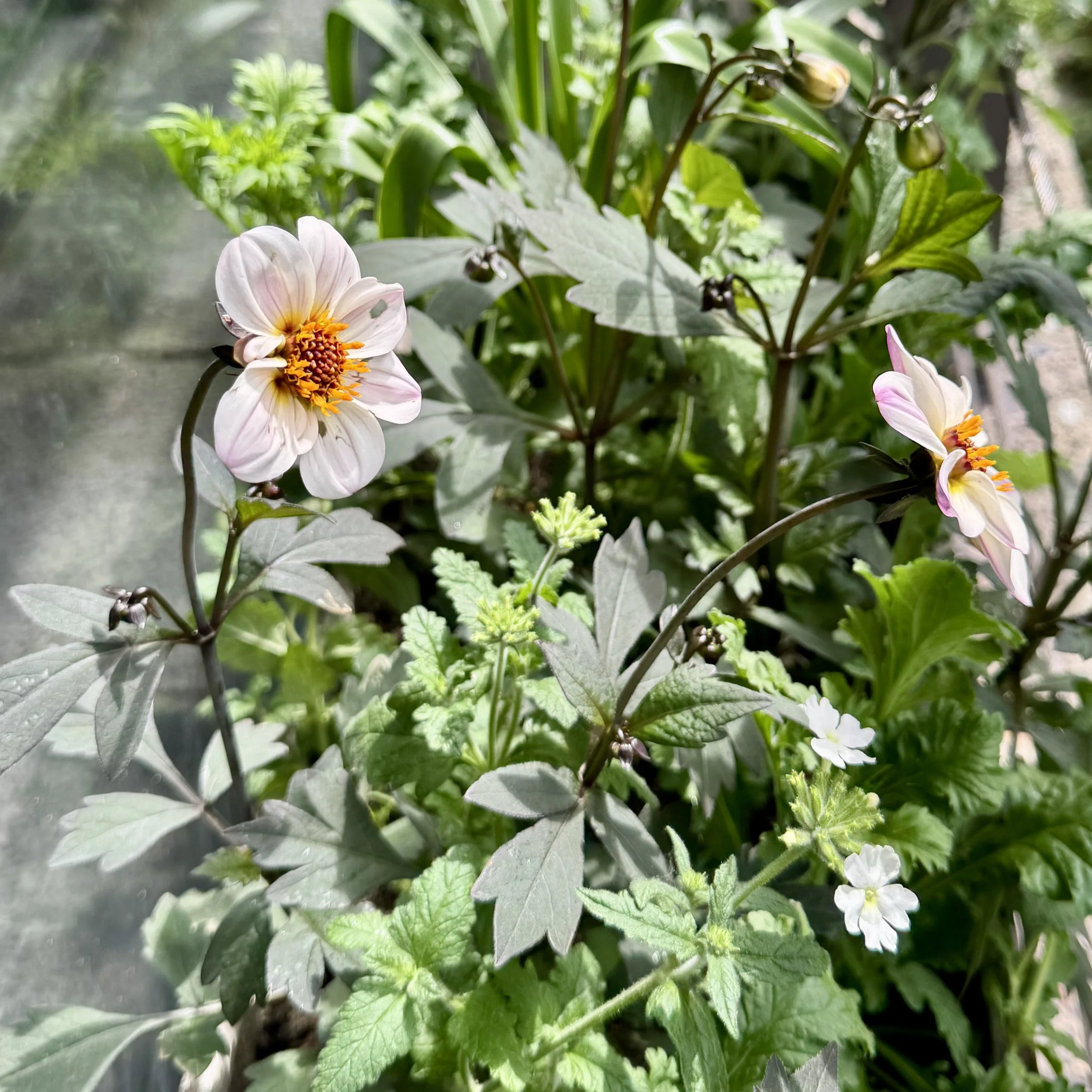
If you want to try growing something different, just try it – you might be pleasantly surprised! And don’t neglect north facing balconies - a surprising number of plants seem to like them.
Window boxes
In the terrace blocks, if you don’t have window boxes they can be purchased from the Barbican Estate Office (020 7029 3965). As of March 2023, they cost £125 each.
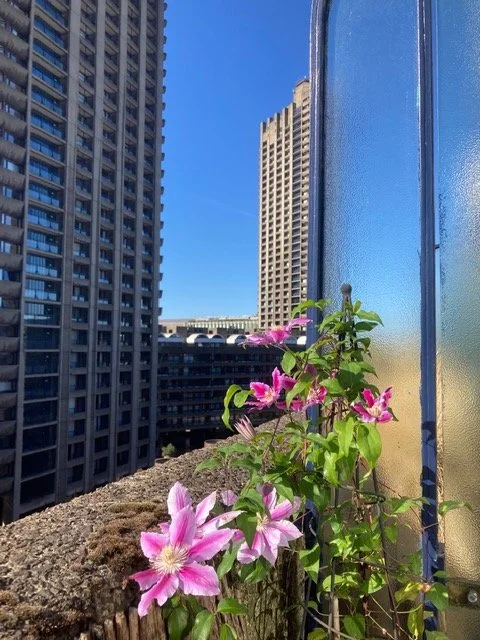
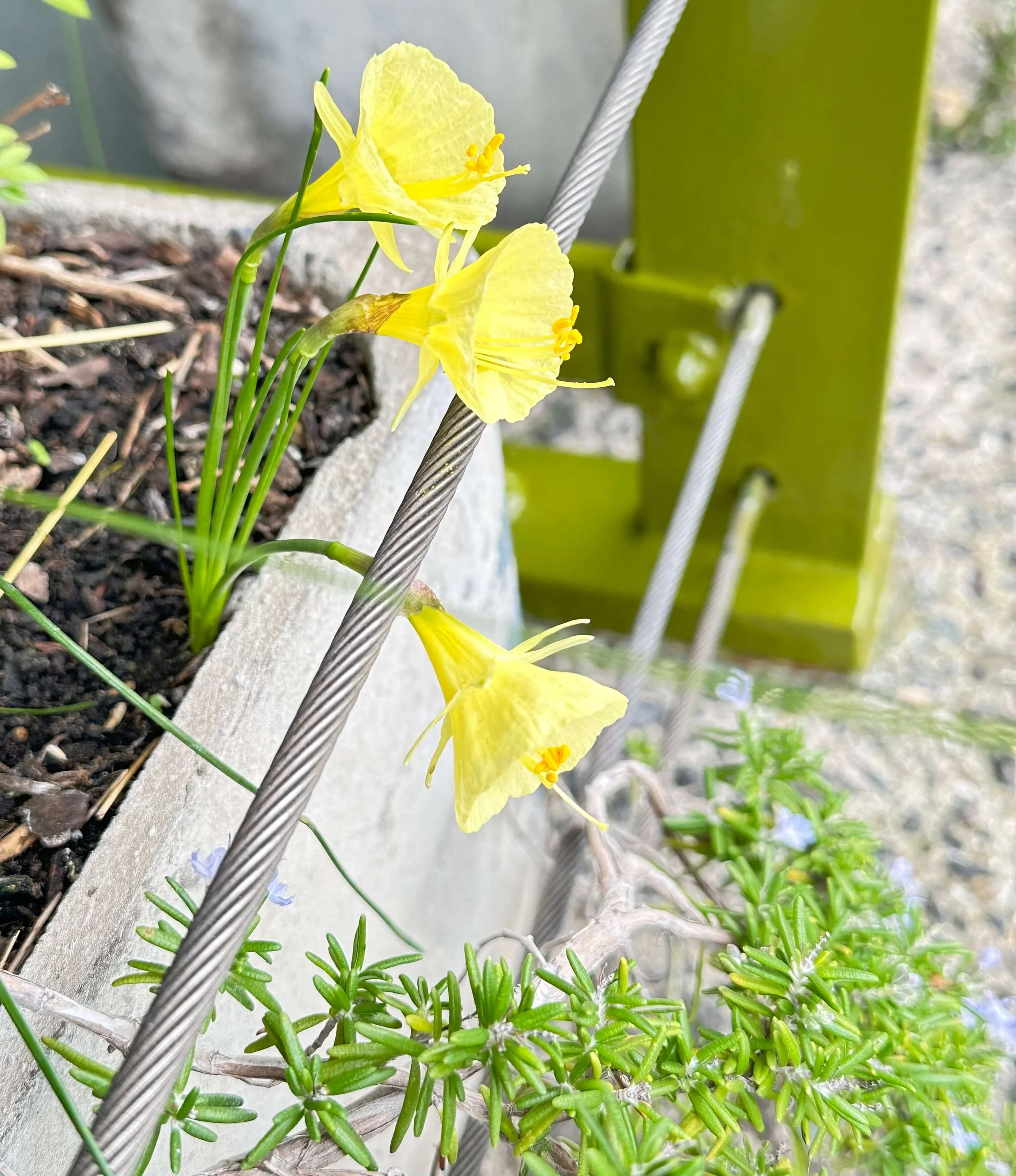
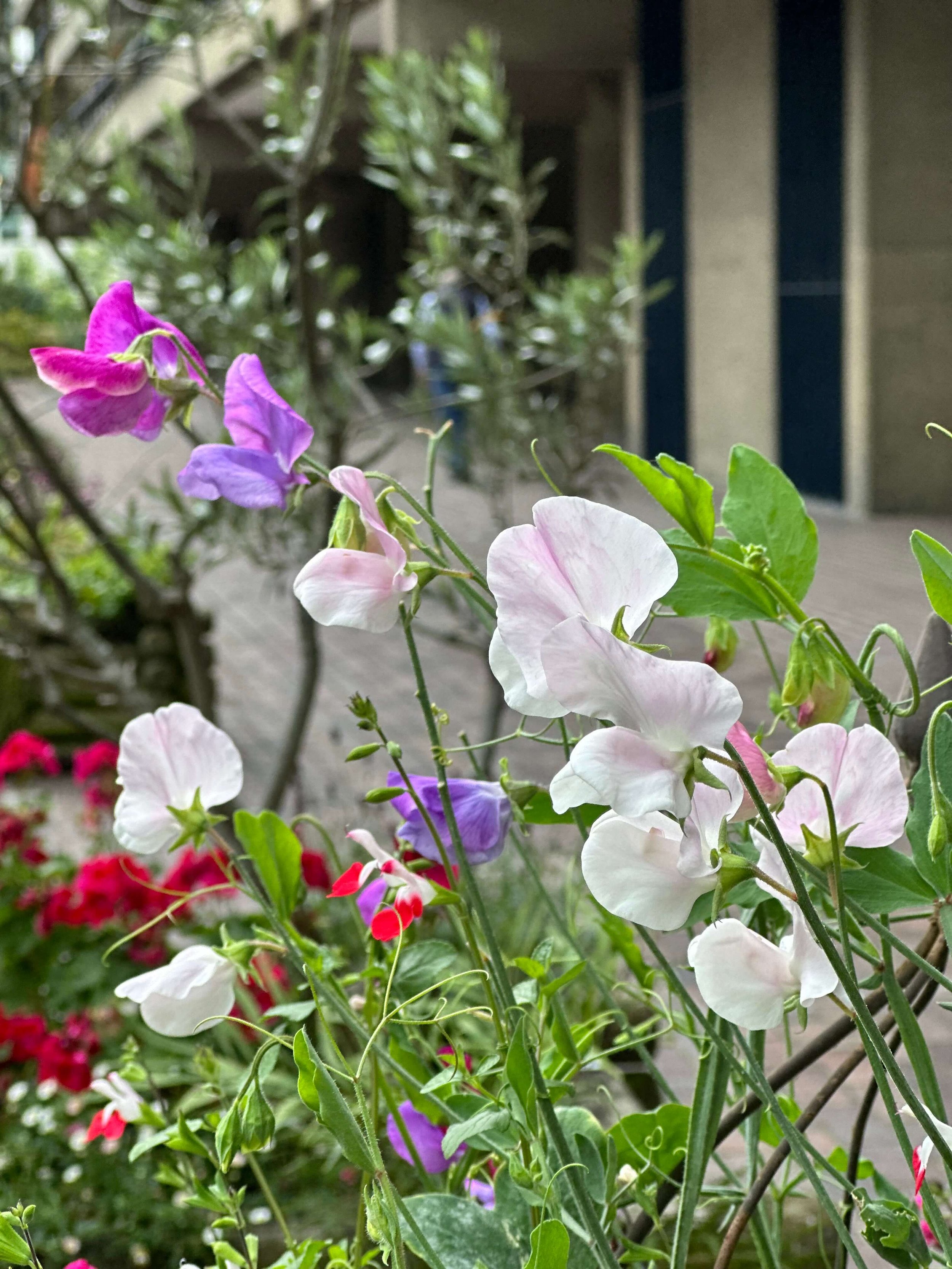
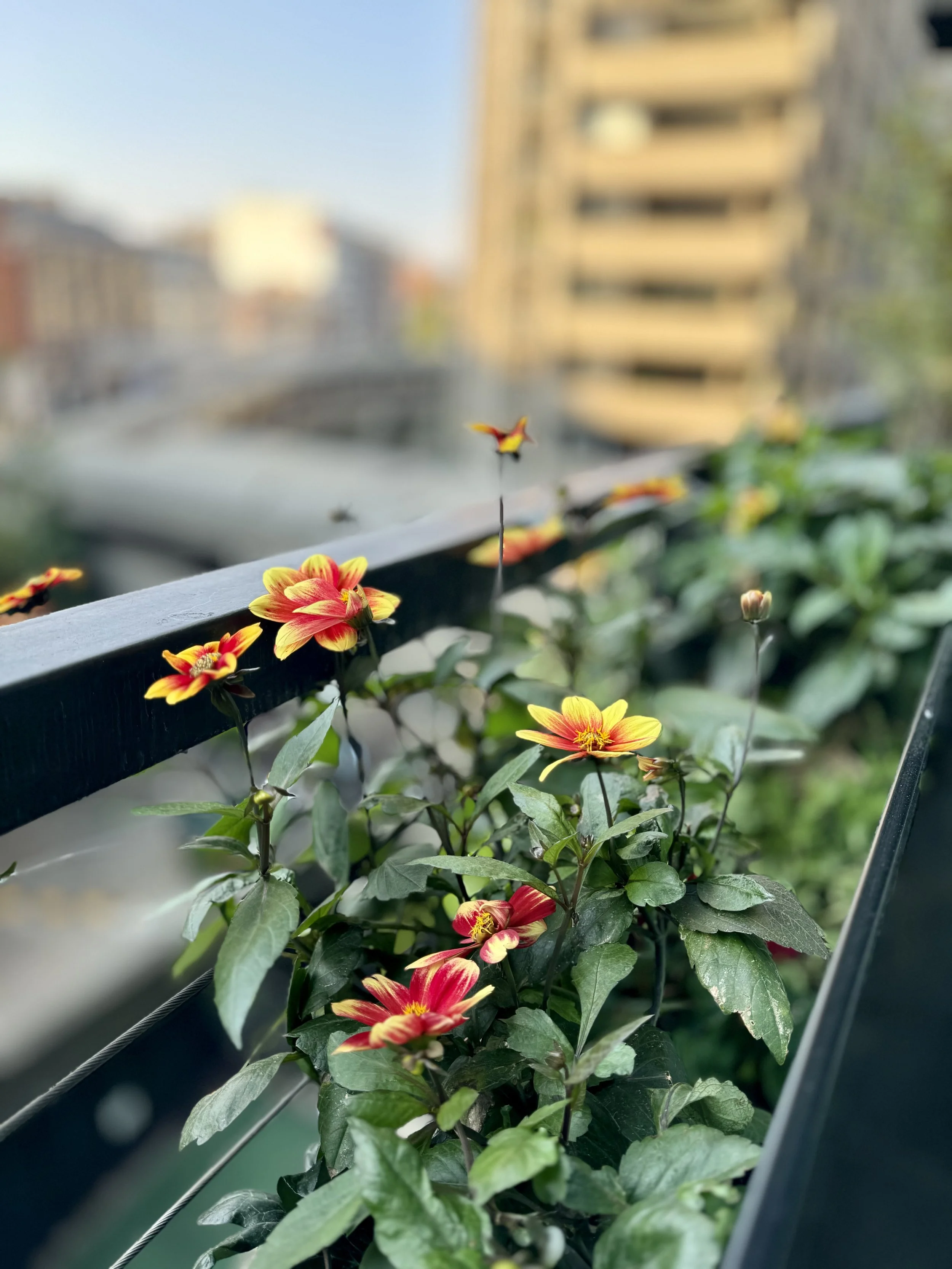
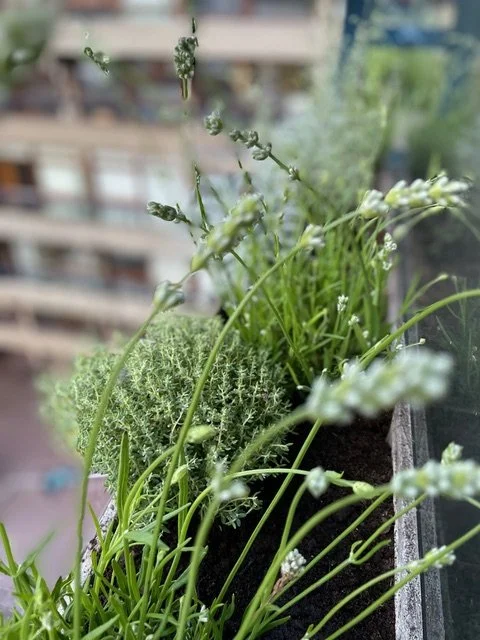
Soil
When moving into a new flat, ideally you would replace the soil in your window boxes - but the weight involved makes this very difficult. As an alternative, replace the top 1 - 2 inches of soil. For general planting, use a compost like “John Innes No 3” that includes loam to hold nutrients and maintain good structure for root growth. Whichever you do, make sure you feed your plants once they are growing.
If there is something special you want to grow, research the conditions it likes. The Barbican Library has a good selection of books and there are enormous resources online.
If good drainage is recommended, add some horticultural sand or grit to your compost.
Plants that like acid soil (heather, azaleas etc.) don’t thrive, because London water is so alkaline.
Biodiversity
As the mix of plants grown on the Estate - including Beech Garden and the balconies - has improved, the number and range of visiting birds, butterflies and bees has increased. Goldfinches visit the balconies, and there are flocks of sparrows in Beech Gardens, who feast on the seeds of plants such as verbena bonariensis. These plants also encourage bees, butterflies and other insects to visit.
Some small shrubs like lavender are a popular choice and will give scent on the balcony, but remember that it is not possible to encourage bees and butterflies without also encouraging midges, gnats and wasps. There is a separate BHS information sheet on planting for biodiversity.
There is a Wildlife Garden on Fann St just north of the Barbican, who are always looking for helpers if you are interested in this kind of gardening. You can gain entrance with the Barbican key and they have a work session there on Wednesday mornings from 10am onwards.
Plant suggestions
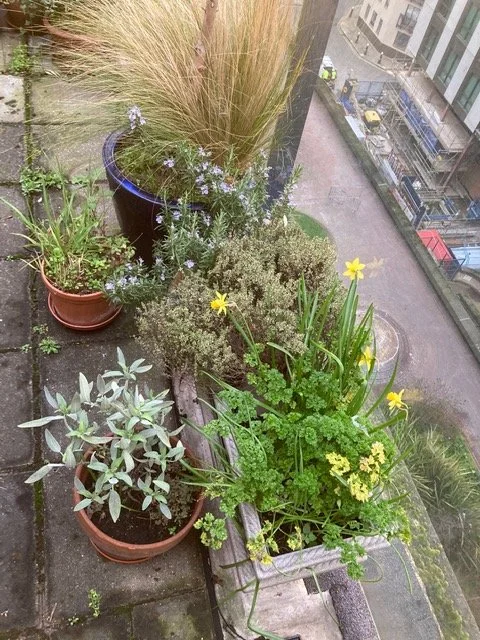
The following plants are thriving on members’ balconies:
Calamintha nepeta Blue Cloud
Buddleia Buzz Indigo
Rosemary
Gladiolus byzantinus (plant bulbs in autumn)
Erigeron karvinskianus – Mexican Daisy
Escallonia Show Stopper
Agapanthus Twister
Aquilegia Pink Barlow
Salvia Cerró Potosoi
Sisyrinchium Striatum
Leucojum aestivum (plant bulbs in autumn)
Dianthus
Eragrostis trichodes
Narcissus Julia Jane (plant bulbs in Autumn)
Euphorbia myrsinites
Euphorbia epithymoides
Watering
Watering is a key to success, but be aware that even heavy rain won’t give much water to plants in containers – the rain can bounce off the leaves, leaving the compost dry.
Water regularly throughout the year (more frequently in summer than in winter), giving just enough water to saturate the compost and no more - when water runs out of the bottom of the container, it’s washing nutrients away. Newly planted items need more water until they are established.
If you go away for more than a few days in the growing season, try to arrange for someone to come and water (it’s ideal if you can have a reciprocal arrangement with a neighbour).
Make sure all containers have good drainage; plants die if they stand in water.
Feeding
A “controlled-release” fertiliser can be added to the compost when planting.
For permanent planting, it’s a good idea to give a general purpose feed in spring and then water with a multipurpose liquid feed monthly during the summer – this will encourage flowering.
On-going care
For repeat flowering plants, taking the dead flowers off lengthens the flowering season by encouraging more flowers to form.
If a permanent plant has filled the root space available in the container, it can be revived by repotting in a slightly larger container, or by root pruning. To root prune, remove the plant from its container (not so easy if planted in a trough on the balcony shelf), cut off up to a third of the outer roots and re-pot in the same container using fresh compost.
Barbican Horticultural Society
The Barbican Horticultural Society is a hive of knowledge and activity, and can be contacted on membership@babricanhortsoc.co.uk
The society is affiliated with the RHS, who have a wealth of information on planting in containers.
Revised March 2023, with additional photographs added in 2026 courtesy of: Sarah Bing, Patrick Gibbons, Helen Hulson, Jakki Moxham, Pam Muir and Judith Serota.