
From Blitz to Bloom
The Secret History of the Barbican’s Landscape
The Barbican’s greenery was never intended as an afterthought. It was a fundamental architectural participant from the first sketch. The architects Chamberlin, Powell and Bon were not just building towers. The three neighbours from Chelsea turned their 1951 competition win into a career defining the City’s skyline. Peter Chamberlin provided the political grit, Geoffry Powell brought the opportunity and Christoph Bon, a former student of Le Corbusier, provided the Continental modernist eye. Together, they were creating a ‘haptic, textural palette’. Nature and bush-hammered concrete were designed to live in a permanent, deliberate truce.
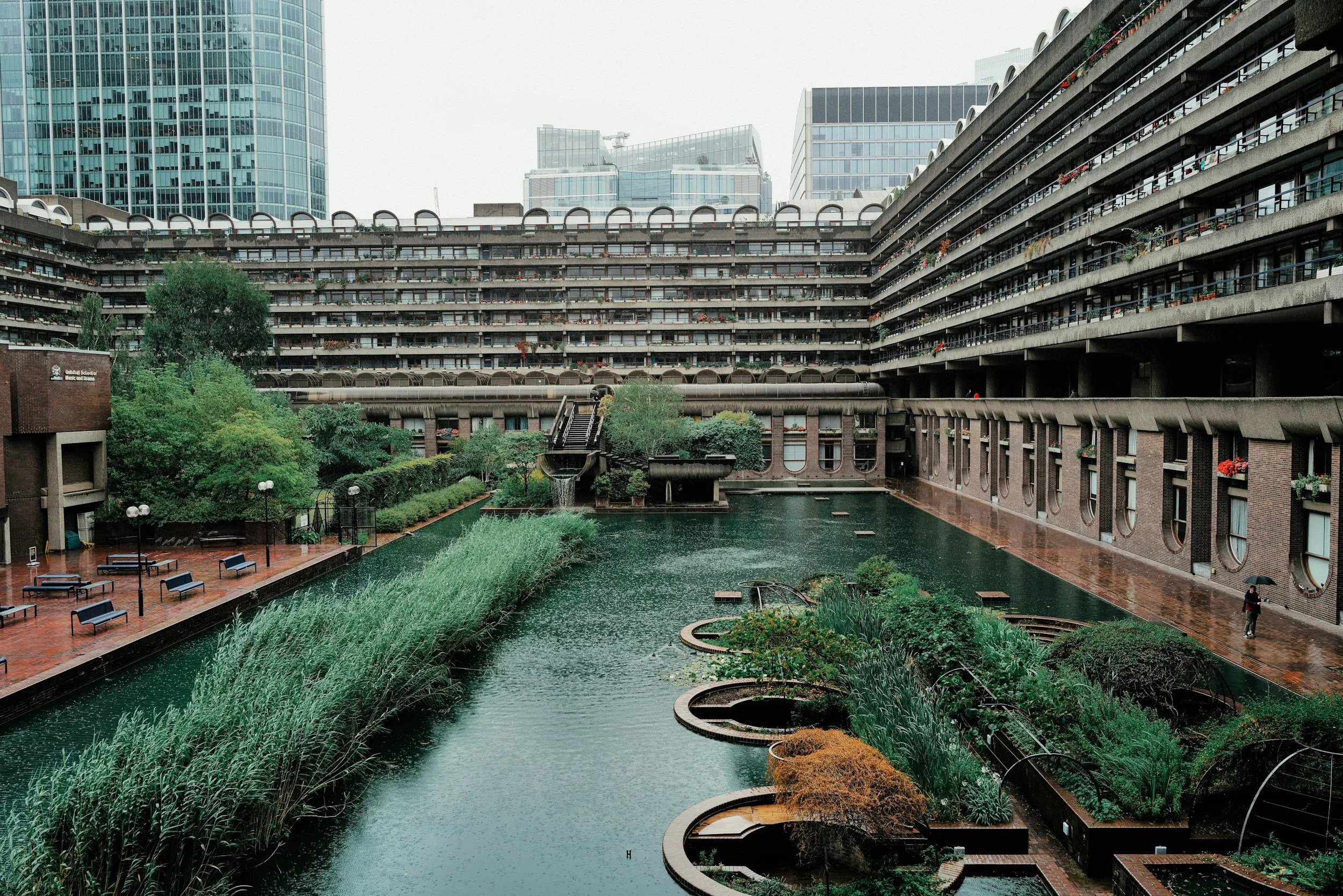
Barbican sunken garden | Photograph by Daniel Moore on Unsplash
A Blank Canvas of Devastation
To understand the landscape, you must understand the void it filled. The Blitz of 1940 left the Cripplegate area a wasteland. You could walk for half a mile without passing a structure still standing. The residential population plummeted from 14,000 in 1851 to just 48 people by 1951.
This devastation gave the architects a tabula rasa. They rejected the informal garden suburbs of the time in favour of a ‘definite formality’. They looked to the Inns of Court and the city of Venice for inspiration. They aimed to create a ‘continuum of green’ where residents moved safely, separated from the ‘dangers of vehicular traffic’.
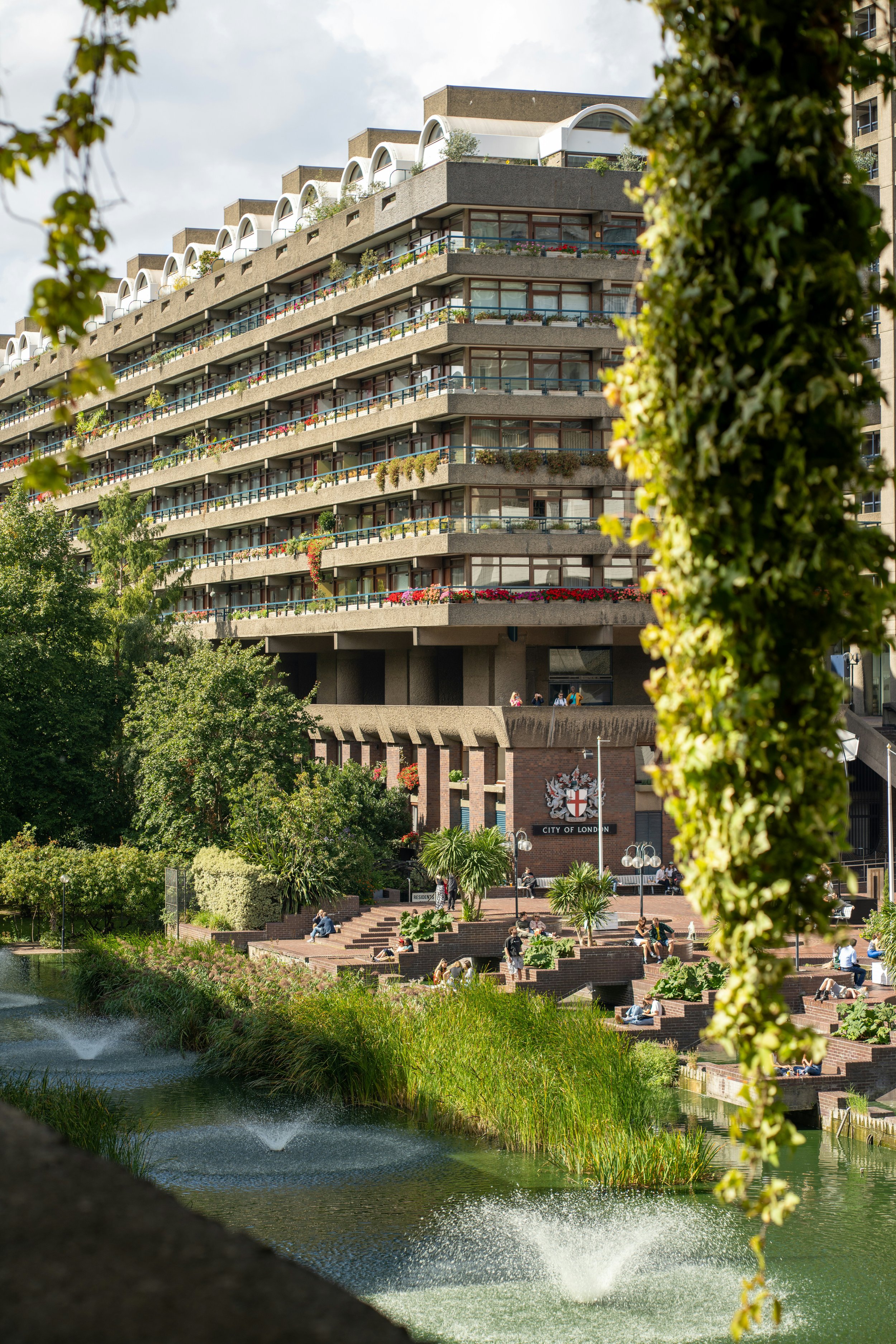
The Utopian Plan
As early as 1955, the architects’ feasibility study proposed forest trees as essential for ‘mental recreation’. The original 1956 proposal already featured a conservatory and ‘ornamental water’, proving the urban jungle was intended from the start rather than a later addition to hide the grey.
The result is a Grade II* listed masterpiece. It uses a ‘Secret Garden’ effect where rigid geometry is offset by the round forms of waterfalls and lakes. Even the material choice was deliberate. The iconic pitted concrete was a ‘Plan B’ when white marble proved too expensive. We ended up with grey Penlee Granite aggregate, hand-worked with a bush hammer. It needs the greenery to breathe.
The Hand-off to the High-Rise
The architects provided the frame, but they expected the residents to finish the picture. This is where the communal landscape meets your private terrace. The built-in concrete window boxes are not just amenities. They are architectural anchors. They were designed to carry that "continuum of green" from the lakeside all the way up to the fortieth floor.
When you plant your balcony, you are completing the architects' 1959 circuit. You are turning a concrete ledge into a vital cell of the estate’s living skin.
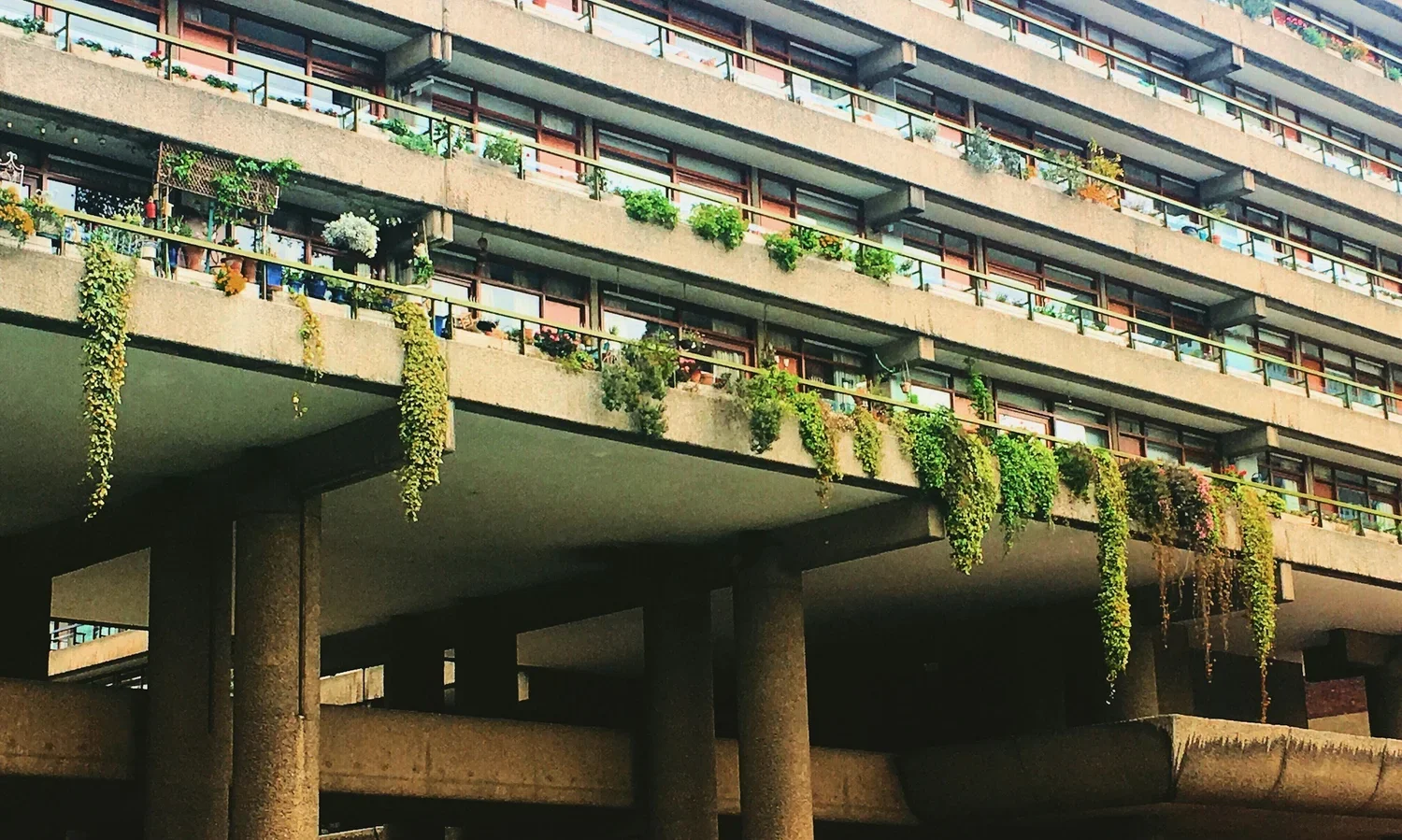
Join the Living History
The vision doesn't end with the architects. It continues with the people who live here. Since 1990, the Barbican Horticultural Society (BHS) has acted as the custodian of this green dream. They host plant swaps, expert talks, and balcony competitions. It is the best way to meet neighbors who understand that a balcony is more than a ledge. It is a piece of a 20th-century masterpiece. If you want to have a go at the "fuller way of life," join the BHS here.
Further Reading
● The Visionary Context: Gresham College - The Barbican: Past, Present and Future
● Official Heritage Record: Historic England - The Barbican (List Entry: 1001668)
● Architectural Philosophy: Barbican: A Unique Walled City Within the City (University of Edinburgh)
● Resident Management Guidelines: City of London - Barbican Listed Building Guide
By Alessandro Ferrari, Andrewes House, Barbican