
Growing Orchids in the Barbican
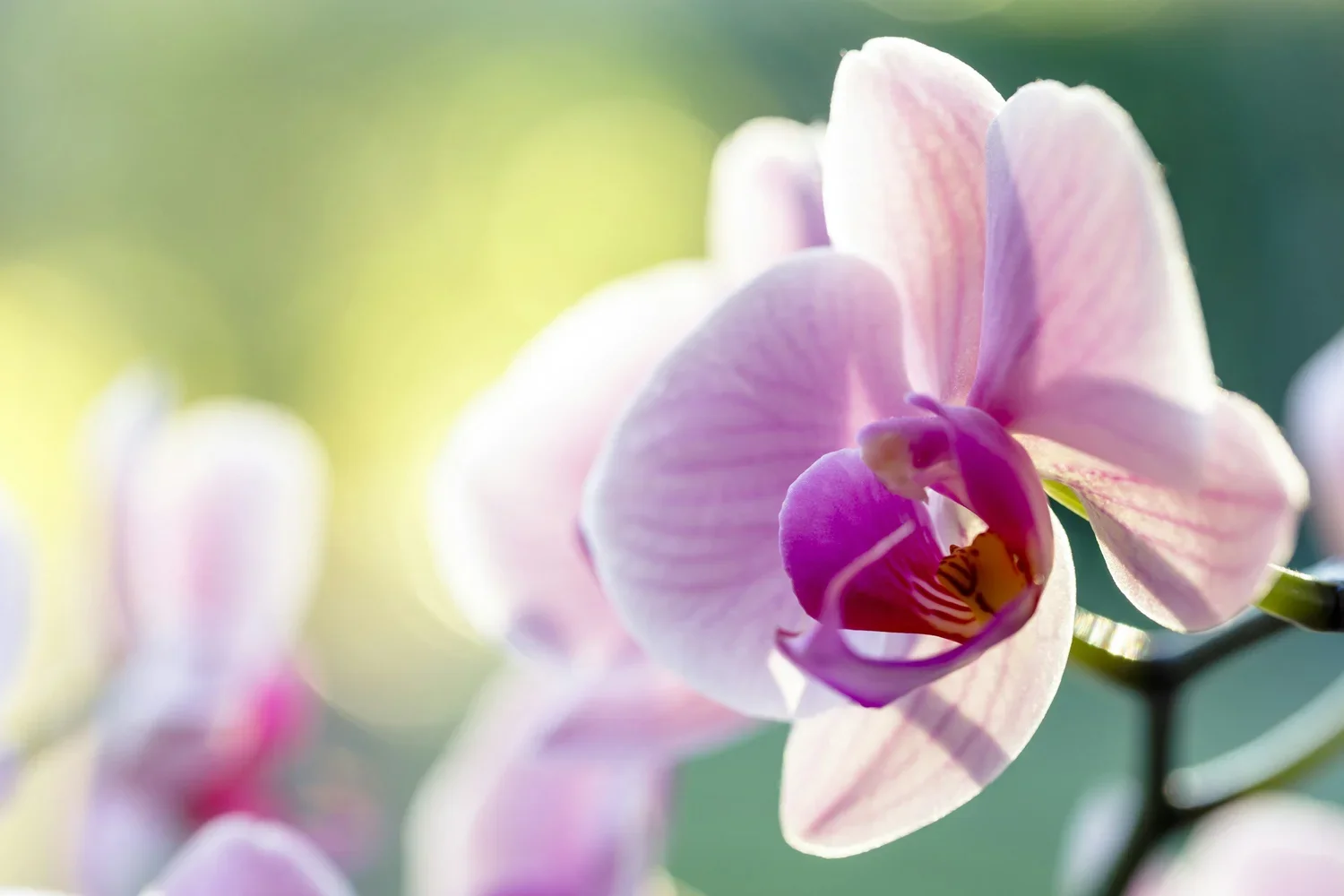
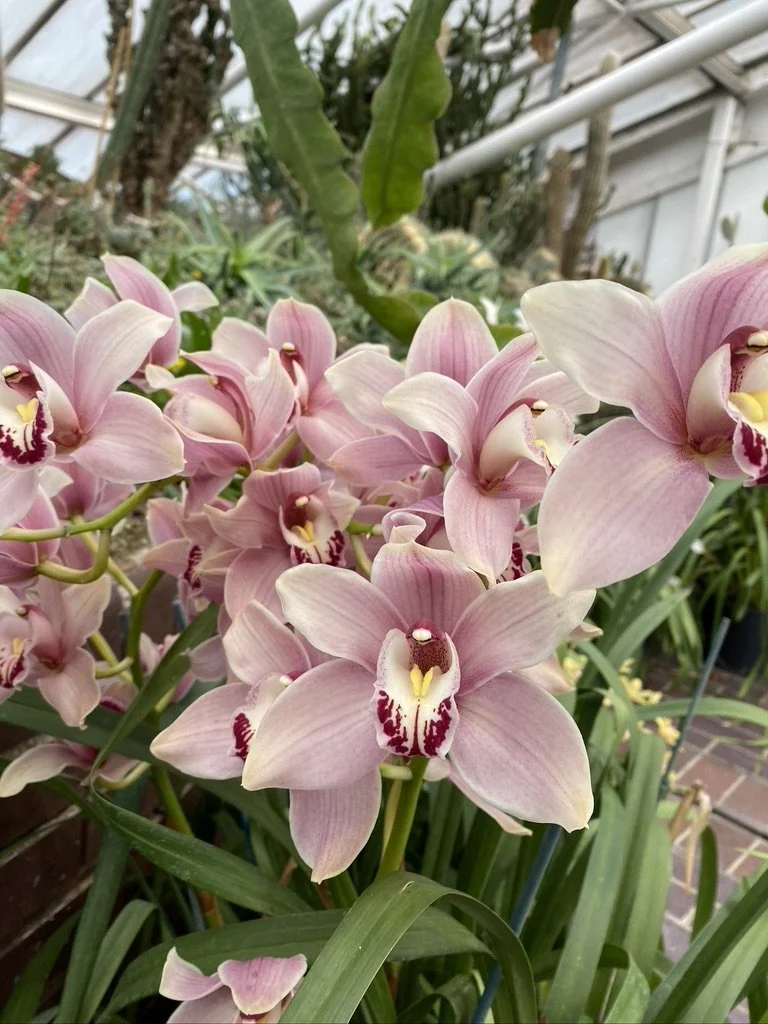
Close-up of a pink orchid flower
Orchids are now the top selling flowering plant in the UK. Mostly what we see in our supermarkets are phalaenopsis or moth orchids: lovely, long lasting, and surprisingly cheap to buy, but once finished flowering end up in the bin, or better still the Garden Waste Bin!
For those of us who love growing plants and wish to delve more deeply into a fascinating and rewarding family of plants, orchids have a lot to offer. There are over 30,000 different species of orchids in the world, from the thimble size miniature plants to hulking great monsters that climb trees. There is an orchid for every spot, and for every taste. There will be one that will suit the peculiar little microclimates inside and outside your Barbican flat.
The species can make a difference
My flat is too warm and dry for phalaenopsis (moth orchid) to do well, I can keep them living but they are reluctant to flower. Phalaenopsis need that Autumn drop in temperature to instigate flowering. If you have a cool and shaded spot a phalaenopsis might be the plant for you and if you are successful with that you might like to try out more of the huge range of other phalaenopsis species that are available.
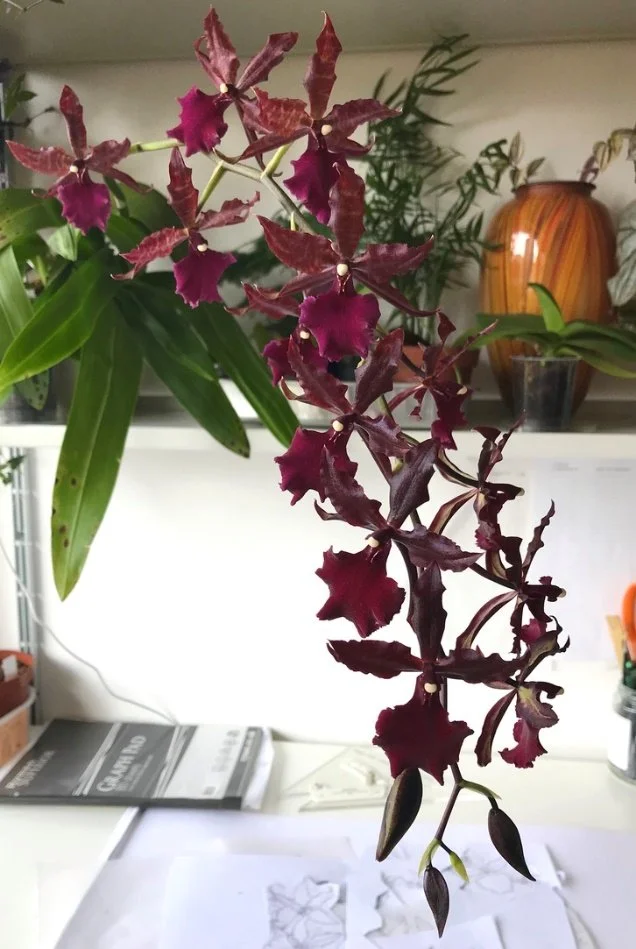
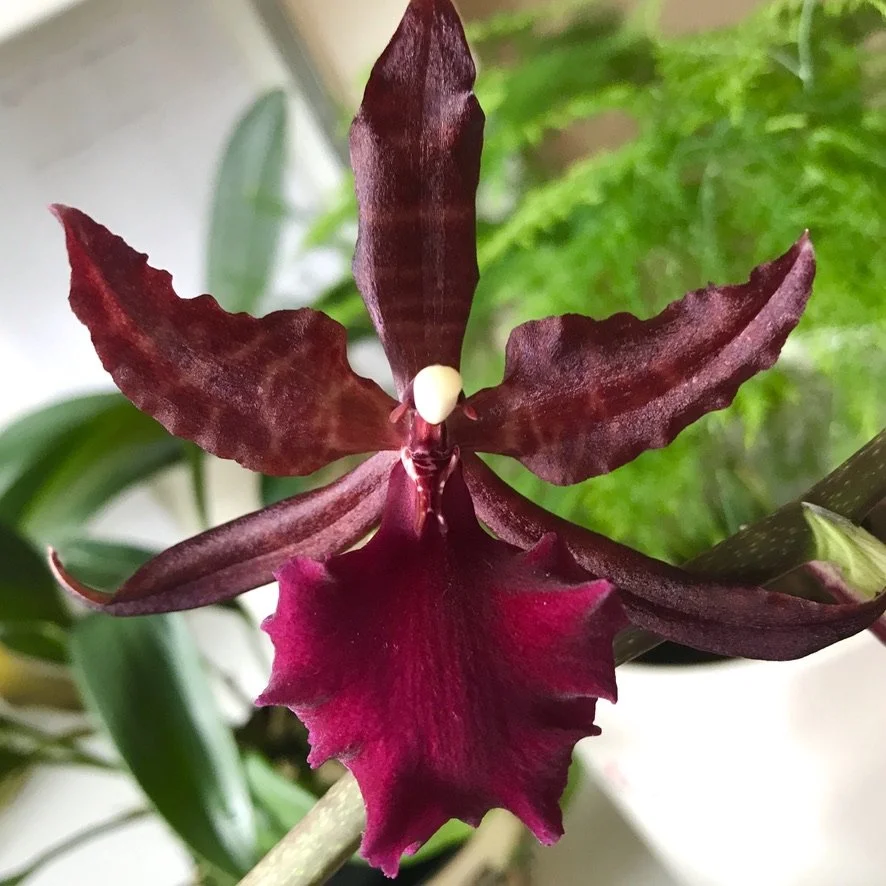
Probably my most successful orchid so far is Oncostele Midnight Miracles which I grow on a table by my South facing window where it is hot, dry and actually quite neglected. Once every two or three weeks (or when it looks really dry), I soak the whole pot in water for an hour or two. Occasionally I throw in a drop of baby bio with the water. It flowers every year and once even produced an inflorescence of 16 flowers.
Ludisia bicolor is what is known as a ‘jewel orchid’, orchids which have foliage that can outdo their flowers in the beauty stakes. I have seen Ludisia bicolor thriving in the flats of some fellow members of the Barbican Horticultural Society. There are several other jewel orchids but most prefer high humidity, it might be worth creating a mini jungle in a terrarium, a tiny greenhouse, where several plants clustered together can increase humidity.
Cymbidium orchids can also do well if you have a cool and bright flat. They benefit from a summer holiday on the balcony in the shade.
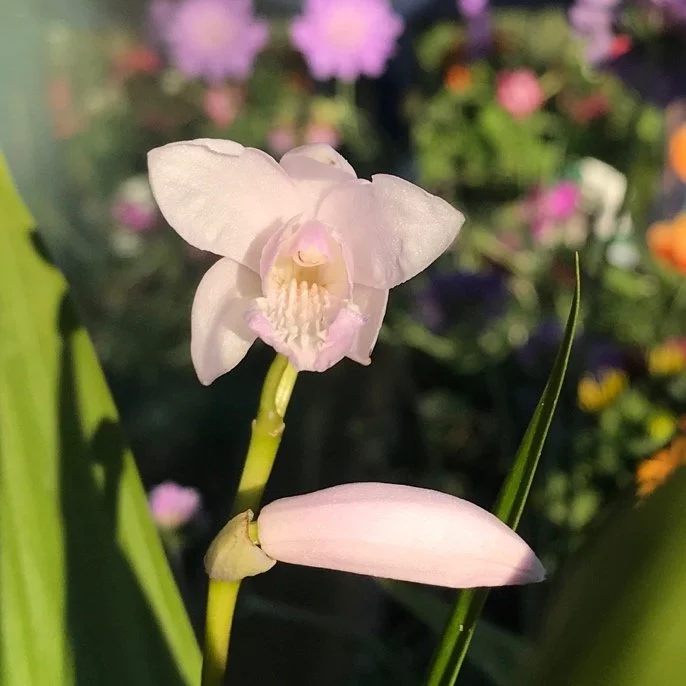
I also grow a couple of orchids in my south facing window boxes. Bletilla striata, native to Japan, likes to be kept completely dry in its dormant season and needs to experience the winter cold to thrive and flower the following summer. Luckily with an upstairs overhanging balcony my window boxes get virtually no rain so I can completely control when my plants have water.
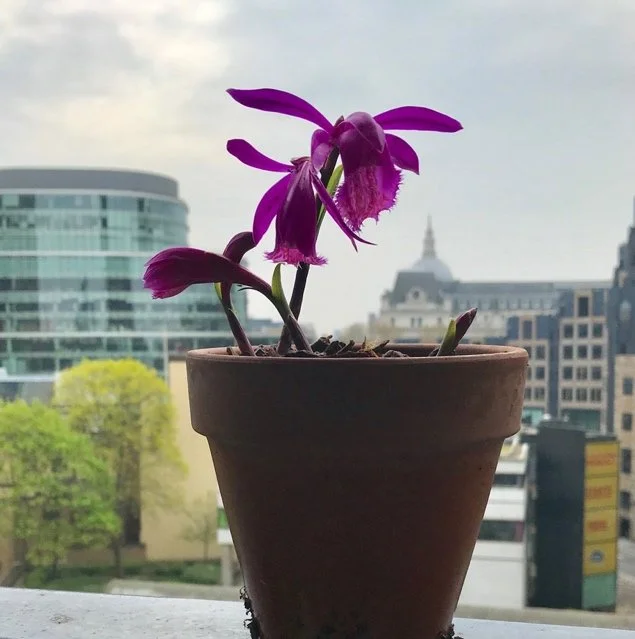
My second outdoor orchid is Pleione formosana, this little plant pops up its flowers in spring with the leaves coming along afterwards. It also likes to be kept dry and cold all winter. No water necessary until the flower shoots begin to emerge in Spring. The little bulbs need to be repotted every year. I grow both outdoor orchids in a mix of orchid compost and peat-free compost in pots which I then sink into the windowbox. They do like plenty of water during their growing seasons.
Often with orchids it is down to trial and error and with a bit of experimentation you will find the plants that will work in your flat.
Resources
Check the Royal Horticultural Society list of indoor and outdoor orchids that have received the RHS Award of Garden Merit, an award given to plants that are considered reasonably easy to find, grow and reflower.